 X
X
 100%
100%
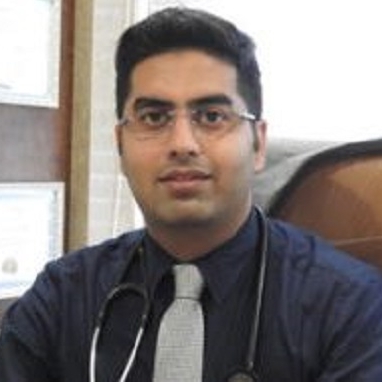
DR SAHIL FULARA
Diabetologist/Endocrinologist
- Fees: INR 1,500
-
Thursday 9:00 AM - 10:00 AM
(See all timing)Monday 9:00 AM - 10:00 AM,
Thursday 9:00 AM - 10:00 AM
Introduction
Dr. Sahil Fulara is one of the best known doctor in the field of Daibetologist/Endocrinologist in Mumbai, India. Dr. Sahil Fulara has also completed his medical degree at the Dr. D.Y. Patil University School of Medicine in Mumbai, India and has work experience at Grant Medical College - Sir J.J. Group of Hospitals, Mumbai. Dr. Sahil Fulara is an enthusiastic and highly motivated Physician who has been successfully treating his patients with utmost care and high level professionalism.Dr. Sahil Fulara has served as Fellow Observer at METHODIST HOSPITAL, HOUSTON, USA, and thereby, gained an in-depth experience in the field of Endocrinology. He has also done research on Hospital based descriptive study of spectrum of end stage renal disease in tertiary care hospital. Dr. Sahil Fulara enthusiasm for science and desire to take the medical science to the next level has rewarded him with a very promising and fulfilling career. Dr. Sahil Fulara takes pride in his ability to coordinate and deliver personalized high quality care to each unique patient. Dr. Sahil Fulara goal is to establish a long-term relationship with his patients and provide them with personal advises on staying healthy, preventing illness and managing their medical needs. Dr. Fulara is also attached to foreign consulates viz. Saudi Arabia, UAE, Oman, Kuwait, Qatar, Bahrain, Costa Rica and Dominican Republic in Mumbai. Dr. Fulara is attached to various social, charitable and medical organizations. Dr Fulara is associated with Jaslok Hospital in the department of Endocrionology, Diabetes and Metabolism.
Hospital Associations
Jaslok Hospital And Research Centre
Services/Interest
- Endocrionology
Awards and Recognitions
Participant/Delegate/faculty in the "Symposium on Pneumonia and its prevention in adults". Dr. D.Y. Patil University, Department of Pulmonary Medicine. (MMC/MAC/2014/C-000516) Participant/Delegate/faculty in the CME organized by Mumbai Hematology Group and Mumbai Oncology Association. Participant/Delegate in Diabetes CME and workshop Held at Dr. D.Y. Patil Hospital and Research Center. Participant/Delegate in "CURRENT TRENDS IN THYROID AND PAROTID SURGERY" held at Dr. D.Y. Patil Hospital and Research Center. Participant/Delegate in Diabetes Management: The Role of Sitagliptin at Symposium on the Occasion of the 49 th Annual meeting of the EASD (European Association for the study of Diabetes) in Barcelona, Spain. Participant/Delegate in Risk Management and optimal Lipid treatment options in patients with metabolic Disease at Symposium on the Occasion of the 49th Annual meeting of the European Association for the study of Diabetes in Barcelona, Spain. Participant, in Advances in Diabetes at 7 th International Symposia on Diabetes 2012 conducted by the prestigious international faculty from Joslin Diabetes Center (Boston, USA). Participant/Delegate in AACE (American Association of Clinical Endocrinologists) at Orlando, USA. Participant/Delegate in ADA (American Diabetes Association) at New Orleans, USA.
I Speak
English, Hindi
Feedback For Dr Sahil Fulara
Write FeedbackManaparambil Manikutty Jawahar Jawahar
(15 Oct 2020)Shruti Tirodkar Tirodkar
(03 Aug 2020)Shivani Nakhawa Nakhawa
(28 Jul 2020)Jaslok Hospital And Research Centre Timing
Monday
9:00 AM - 10:00 AM
Thursday
9:00 AM - 10:00 AM
Online Consultations
Monday
4:00 PM - 6:00 PM,10:00 AM - 5:00 PM
Tuesday
9:00 AM - 8:00 PM
Wednesday
2:00 PM - 6:00 PM,10:00 AM - 9:00 PM
Thursday
5:00 PM - 5:30 PM,1:00 PM - 2:00 PM,10:00 AM - 3:00 PM,5:00 PM - 8:00 PM
Friday
9:00 AM - 10:30 PM
Saturday
1:00 PM - 5:00 PM,9:00 AM - 1:00 PM
Sunday
7:00 PM - 8:00 PM,8:00 PM - 10:00 PM,2:00 PM - 6:15 PM
Who are diabetologists?
Diabetologists are the specialists in managing the sugar level in the patient's blood. They can guide the patients to control the spike of blood glucose level. They are often a board-certified endocrinologist specialized in metabolic disorders. These physicians work with patients to bring blood sugar under control through medication, diet, and, exercise.
What do diabetologists do?
The most important part of diabetologist's work is to show patients how to manage diabetes in the best possible way. The diabetologist mainly uses blood tests in order to detect and monitor changes in the blood glucose levels of the patient's body. In the case of gestational diabetes and type 1 diabetes, they use insulin therapy and suggest a change of lifestyle including moderate physical activity and regular well-balanced diet.
What disease does a diabetologist?
Diabetologists treat all forms of diabetes, including diabetes mellitus, insulin-dependent diabetes, diabetes insipidus, and gestational diabetes.
When to see a diabetologist?
- Your regular doctor can treat diabetes, but they might want to see an when:
- You feel tingling in your hands and feet from nerve damage.
- You have frequent episodes of low or high blood sugar levels and weight changes and vision problems and kidney problems.
- Frequent hospital admissions because of diabetes.
- You need to learn how to manage diabetes.
- Your diabetes has gotten troublesome to manage, or your treatment isn't working.
- You have complications from diabetes.
What's the difference between Diabetologists and endocrinologists?
Diabetologists treat only diabetic patients while endocrinologists give treatment for the patients having endocrinology problems which also include complications from diabetes. To become Endocrinologists you need to have a D.M degree in Endocrinology, but a Diabetologist needs an M.D degree in General Medicine. Endocrinologists go to college for 4 years, then medical school for 4 more years. Afterward, endocrinologists work in hospitals and clinics as residents for 3 years to get experience treating people. endocrinologists will spend another 2 or 3 years training specifically in endocrinology.
What are the tests performed by a diabetologist?
- Fasting blood sugar is a test that provides vital clues about how the body is managing blood sugar levels.
- Glycated hemoglobin (A1C) test. This test check for Glycated hemoglobin which is a form of hemoglobin that is covalently bound to glucose.
- Oral glucose tolerance test is a test in which glucose is given and blood samples are taken afterward to discover how quickly it is cleared from the blood.
- Random blood sugar is a test that checks your blood glucose at a random time of day.
- The two-hour postprandial test measures blood glucose exactly 2 hours after eating a meal.
What to expect from your first diabetologist's visit?
A visit to the diabetologist usually involves:
- A complete medical history
- A head-to-toe exam
- Blood and urine tests
- An explanation of your management plan
The appointment usually starts with a measurement of the patient's height, weight, and vital signs, including blood pressure and pulse. They also check the blood sugar using a finger stick.
The doctor also checks the teeth and skin for developing sores and skin infections. The patients should be prepared for questions about their current symptoms, family history, and eating habits and it’s important to bring a record of the blood sugar readings. The doctor will also want to know what the patient is currently doing for his diabetes, including any medications he is taking, how often he checks his blood sugar, and if he uses insulin or not.